

Small Space, Big Style: 7 Furniture Picks That Make Rooms Feel Bigger
Môdern Space Gallery · Small-Space Design
Small Space, Big Style
7 Furniture Picks That Make Rooms Feel Bigger

The right furniture doesn't just fit a small room. It can completely change how spacious the room feels.
There is a common assumption about decorating a small space: buy small furniture.
It sounds logical. Smaller room, smaller pieces.
But that is not always what makes a compact room feel larger.
A room can be filled with tiny furniture and still feel cramped, cluttered, and visually busy. Meanwhile, a thoughtfully chosen sofa, generously sized rug, or well-proportioned storage piece can make the same square footage feel calmer and considerably more open.
The difference comes down to visual weight, proportion, function, and flow.
What Actually Makes Furniture Small-Space Friendly?
There is an important distinction to make:
The best pieces tend to give something back to the room.
Think of your square footage as a budget.
Every piece of furniture spends some of it.
The question is: What are you getting in return?
A Sofa With a Visually Light Profile
The sofa is usually the largest piece of furniture in a living room, which means it has an outsized effect on how large—or small—the space feels.
But don't automatically choose the shortest sofa you can find.
Instead, look at its visual footprint.
A sofa with raised legs allows you to see more floor underneath it. Slimmer arms preserve more usable seating within the same overall width. A relatively simple silhouette creates fewer visual interruptions than a heavily padded frame.
Look for:
- Raised or visible legs
- Slim or moderate-width arms
- A clean silhouette
- Proportions appropriate to the wall
- Useful seating width relative to overall width
- Visually quiet upholstery if the room already has several competing elements
Be careful with:
Very deep sofas, oversized rolled arms, heavy skirts, and bulky reclining mechanisms can consume considerably more visual and physical space than their seating capacity justifies.
Shop the Room
Sofas with better proportions
Compare width, depth, arm construction and overall silhouette before deciding what works in your room.
Browse Sofas
An Accent Chair That Doesn't Block the Room
Accent chairs are useful in small living rooms because they provide flexible seating without requiring another sofa.
But they can also become surprisingly bulky.
One of the easiest ways to maintain an open feeling is to choose a chair that preserves some visual space around and beneath it.
Open-sided wood chairs, chairs with raised legs, compact barrel chairs, and certain swivel chairs can all work depending on the layout.
Think about the sightline.
Stand at the entrance to your room.
If the first thing you see is the solid back of a large chair, that chair may visually shorten the room.
Sometimes turning it slightly, moving it to another corner, or choosing a lower-backed profile can open the entire view.
Shop the Edit
Accent chairs with lighter profiles
Compare chair width, depth, back height and base style—not simply the upholstery.
Browse Accent ChairsA Storage Ottoman That Replaces Something Else
Multifunctional furniture is often recommended for small spaces, but there is a catch:
A storage ottoman is a perfect example.
Used thoughtfully, one piece can serve as:
- A footrest
- Extra seating
- Hidden storage
- A soft coffee table when paired with a tray
That can eliminate the need for a separate footstool, blanket basket, or occasional seat.
The test before buying multifunctional furniture:
If the answer is “nothing,” it may not actually be saving you space.
A Narrow, Vertical Storage Piece
When floor space is limited, stop looking outward.
A short, wide cabinet may provide useful storage, but it also consumes valuable wall and floor area.
In the right room, a taller bookcase or shelving unit can provide similar—or greater—storage while using a much smaller footprint.
Vertical furniture also encourages the eye to travel upward, which can make the room itself feel taller.
A simple shelf formula
Instead of packing a bookcase from edge to edge, alternate between:
A storage unit can be technically organized and still make a small room feel cluttered if every shelf is visually full.
Think Up, Not Out
Use wall height before adding more floor furniture
Browse taller shelving and bookcases that take advantage of vertical space.
Bookcases & Shelving
A Coffee Table With Less Visual Weight
Coffee tables sit near the center of a living room, so their visual effect is greater than their size might suggest.
A large, dark, blocky coffee table can become a visual barrier.
That does not mean every small room needs an acrylic table.
Instead, look for ways to reduce visual weight.
- A round or oval table that softens circulation
- A pedestal table with more visible floor around the base
- Nesting tables that expand only when needed
- A glass top where appropriate
- A table with an open lower structure
- A storage ottoman if it can replace the coffee table altogether
Round tables can be especially useful where circulation is tight because they eliminate sharp corners from the pathway.
Nesting tables offer something especially valuable in a compact home: temporary square footage.
Shop the Room
Tables that leave more room around them
Browse coffee tables, side tables and multifunctional living-room pieces.
Living Room CollectionA Desk That Creates an Office Without Creating an Office
Small homes frequently ask one room to perform several jobs.
Your bedroom may also be your office. Your living room may include your workspace.
The solution is not necessarily to recreate a full-sized office in miniature.
Instead, identify what your workday actually requires.
If you use a laptop rather than multiple monitors, a compact desk with a shallow depth may be enough.
If paperwork is minimal, you may need one drawer rather than an entire filing cabinet.
Before buying a desk, measure the chair too.
This is an easy detail to miss.
The desk may fit perfectly against the wall, but the room also needs enough space for the chair to pull out comfortably without blocking the primary walkway.
A Bed That Uses the Space You're Already Paying For
In many bedrooms, the largest unused storage area is hiding in plain sight: under the bed.
A bed with usable clearance underneath—or built-in storage—can reduce the need for another dresser, storage chest, or collection of baskets around the room.
Option One: Visible Clearance
A raised bed allows storage containers to slide underneath.
This can work particularly well for:
- Seasonal clothing
- Extra bedding
- Shoes
- Luggage
- Infrequently used items
Option Two: Integrated Storage
Beds with drawers or lift-up storage hide everything within the furniture itself.
They tend to have more visual weight, but that trade-off can be worthwhile if the storage eliminates another large piece of furniture.
Shop the Bedroom
Make the bed work harder
Compare beds, nightstands, dressers and benches as part of the full room plan rather than as separate purchases.
Bedroom CollectionThe Furniture Trick That Matters More Than Any Single Product
Not necessarily more empty room.
More visible room.
- Visible floor beneath a sofa or chair
- A clear path between pieces
- Wall space around a bookcase
- Light passing through an open furniture frame
- Enough rug to connect the furniture
- A surface that isn't completely covered
- A clear sightline from one side of the room to the other
Our brains use uninterrupted visual cues to understand the dimensions of a space.
When furniture repeatedly interrupts them, a room can feel smaller than it actually is.

The Small-Space Furniture Test
When you find a piece you love, don't immediately ask whether it will fit.
Run it through this test first.
7 Questions Before It Comes Home
Use painter's tape to mark the exact width and depth on your floor.
Can you still move naturally through the room?
Can you see beneath or through the piece, or does it create a large visual block?
Does it solve one problem—or several?
Will buying it allow another piece to leave the room?
What will you see when you enter the room?
Just because something technically fits does not mean it belongs there.

Don't Undersize Everything
This is where small-space decorating advice often goes wrong.
Trying to make everything tiny can actually emphasize the fact that the room is small.
Seven miniature pieces still create seven visual interruptions.
One proper sofa instead of a loveseat plus two chairs.
One substantial piece of art instead of nine small frames.
One larger rug instead of a tiny rug floating beneath the coffee table.
One closed storage cabinet instead of four baskets.
One beautiful lamp instead of several small decorative objects.
Fewer, better-proportioned pieces can make a compact room feel calmer and more generous than a collection of furniture chosen simply because every item was labeled “small-space friendly.”

Sleep + Hidden Storage
HOOMIC Upholstered Platform Bed Frame with Wingback Headboard
A bedroom is often the biggest storage opportunity in a small home. This platform bed’s soft, natural beige linen wingback headboard brings warmth to the room, while the 8-inch under-bed clearance creates space for bins and seasonal storage without adding a bulky dresser.
Shop this pick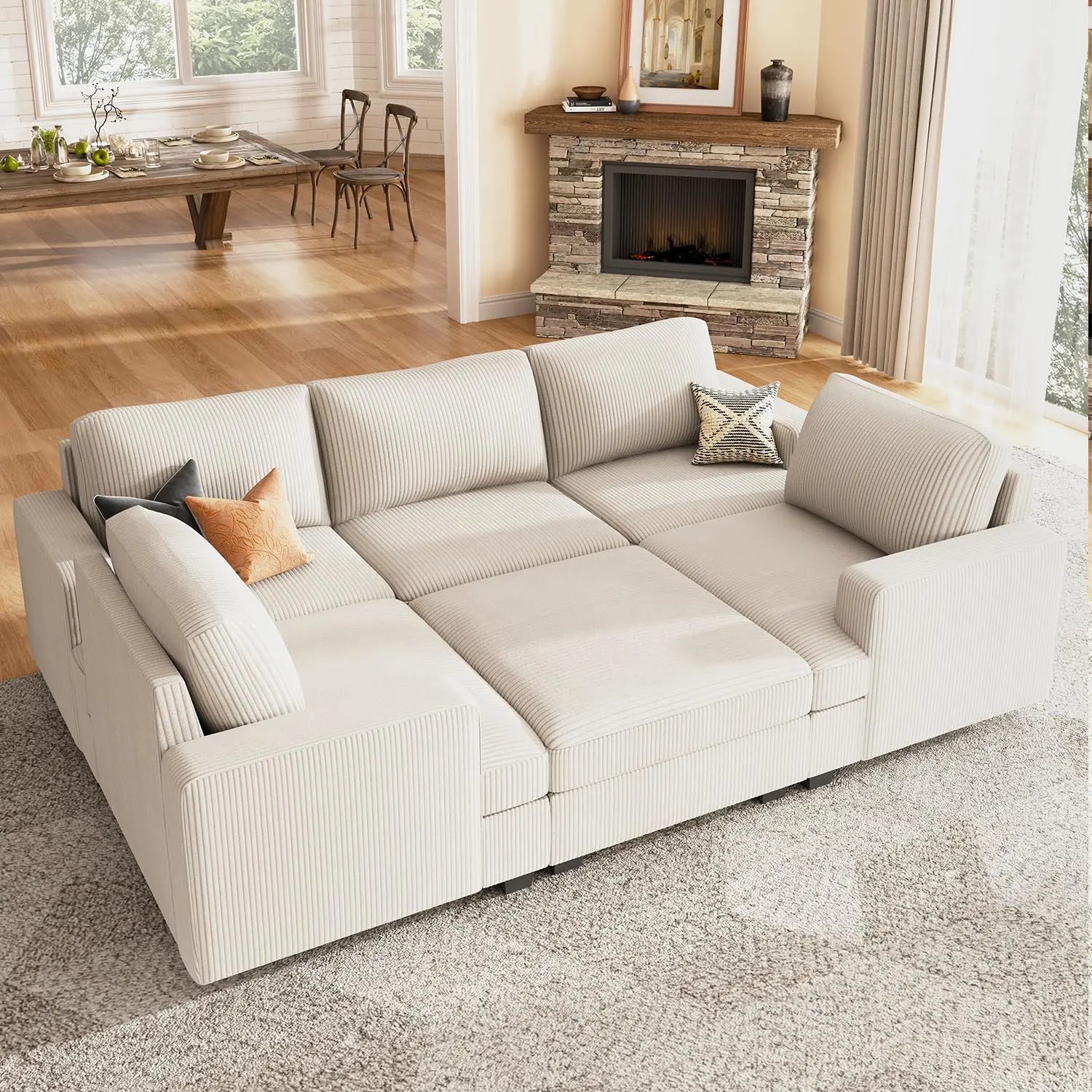
Flexible Seating
Nolany Modular Sectional Sofa with Storage Ottoman
Modular seating lets you reconfigure your living room as your needs change. The included storage ottoman doubles as a coffee table and a hideaway for blankets, remotes, or games—all without adding extra furniture to the room.
Shop this pick
Vertical Storage
Tribesigns 4-Tier Rustic Bookshelf with 2 Drawers
Small rooms benefit from thinking vertically. This bookshelf combines open shelving with two enclosed drawers, giving you display space and hidden storage in one narrow footprint that fits neatly against a wall.
Shop this pick
Open + Airy Organization
Nathan James Telos 4-Cube Organizer
An open cubby organizer is one of the most versatile tools for a smaller room. Use it as a room divider, TV stand, or bookshelf. Its airy, open-back design keeps light moving through the room instead of blocking it like a solid cabinet would.
Shop this pick
Flexible Seating
Poly and Bark Denver Modern Leather Ottoman Pouf
A versatile ottoman is one of the easiest ways to make a compact living area work harder. This leather pouf can serve as an extra seat, footrest, or movable surface when paired with a tray. Its small footprint and warm cognac finish bring function and character without introducing another large furniture piece.
Shop this pick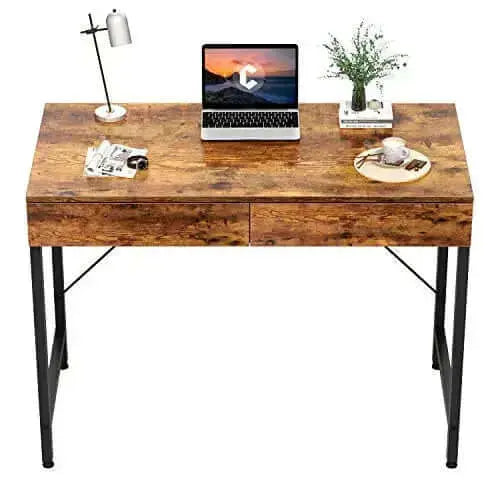
Compact Work Zone
CubiCubi Computer Desk with 2 Storage Drawers
A dedicated home office does not have to mean a dedicated room. This compact 40-inch desk includes two drawers for supplies and cords, making it easy to tuck a productive workspace into a corner, hallway nook, or bedroom.
Shop this pick
Multi-Tasking Storage
POLY & BARK Senja Leather Storage Ottoman
One of the easiest small-space upgrades is furniture that multitasks. This leather ottoman works as extra seating, a footrest, and a coffee table, while concealing throw blankets or magazines inside.
Shop this pickThe Takeaway
Make every piece earn its place.
You do not need a bigger home to live comfortably—you need furniture that is smarter about space. Look for built-in storage, flexible formats, vertical potential, and open, light-friendly silhouettes. Even the coziest room can feel expansive when every piece has a purpose.
Ready to refresh your space? Browse our Bedroom Collection and Living Room Collection for more small-space solutions.
Disclosure: Môdern Space Gallery participates in the Amazon Services LLC Associates Program, an affiliate advertising program designed to provide a means for us to earn fees by linking to Amazon.com and affiliated sites.
Leave a comment